Articles for category: Hardware Comparisons

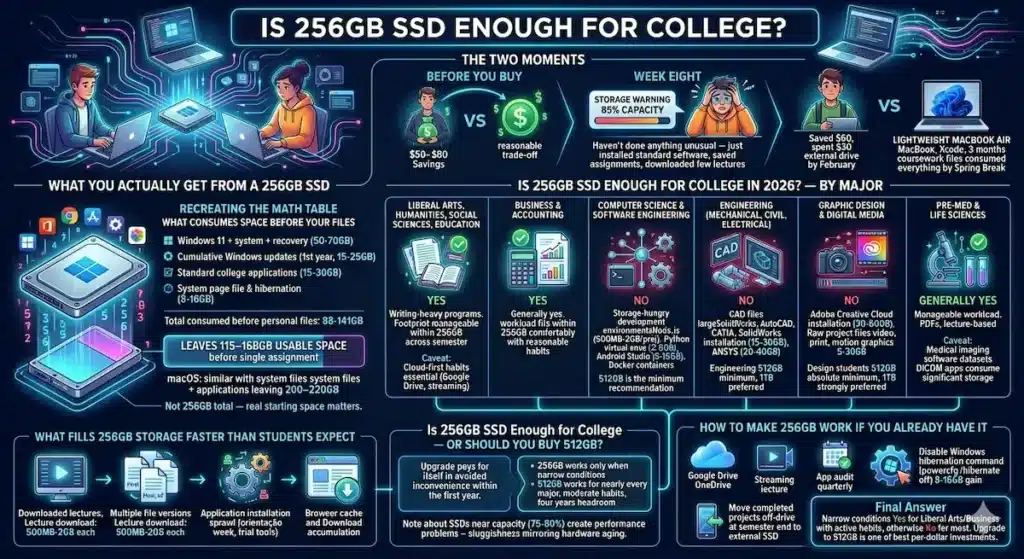
Is 256GB SSD Enough for College in 2026

Is 256GB SSD Enough for College in 2026? (Honest Answer After Real Student Testing)

Last Updated: April 2026 | Author: Marcus Hale | Reading Time: 10 min The question of is 256GB SSD enough for college in 2026 comes up at two very specific moments. The first is before you buy — you’re weighing a $50–$80 savings from dropping to 256GB and wondering if it’s a reasonable trade-off. The second is around week eight of your first semester, when your storage warning appears and you realize you haven’t done anything unusual — just installed the standard software, saved a semester’s worth of files, and downloaded a few lectures — and you’re already at 85%
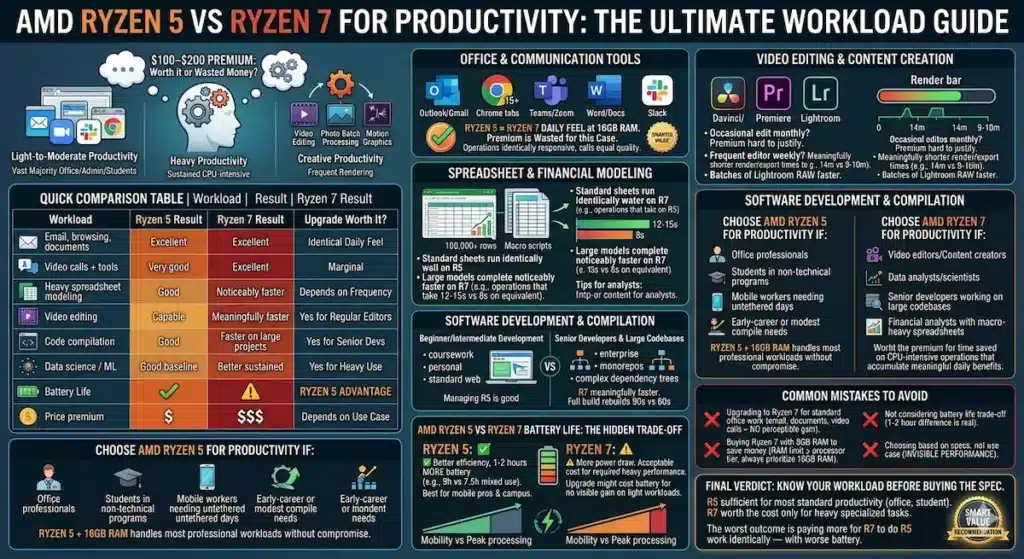
AMD Ryzen 5 vs Ryzen 7 for Productivity

AMD Ryzen 5 vs Ryzen 7 for Productivity in 2026 (Real Workload Testing, Honest Verdict)

Last Updated: May 2026 | Author: Marcus Hale | Reading Time: 11 min The AMD Ryzen 5 vs Ryzen 7 for productivity question comes up constantly among laptop buyers trying to decide whether the $100–$200 price premium for a Ryzen 7 configuration is money well spent or money left on the table. The frustrating reality: most comparison articles either say “Ryzen 7 is faster, buy it if you can afford it” — which isn’t useful guidance — or get lost in benchmark numbers that don’t translate to how the chip actually feels during a real workday. I’ve tested both processor

RTX 4060 vs RTX 4070 Laptop for Gaming

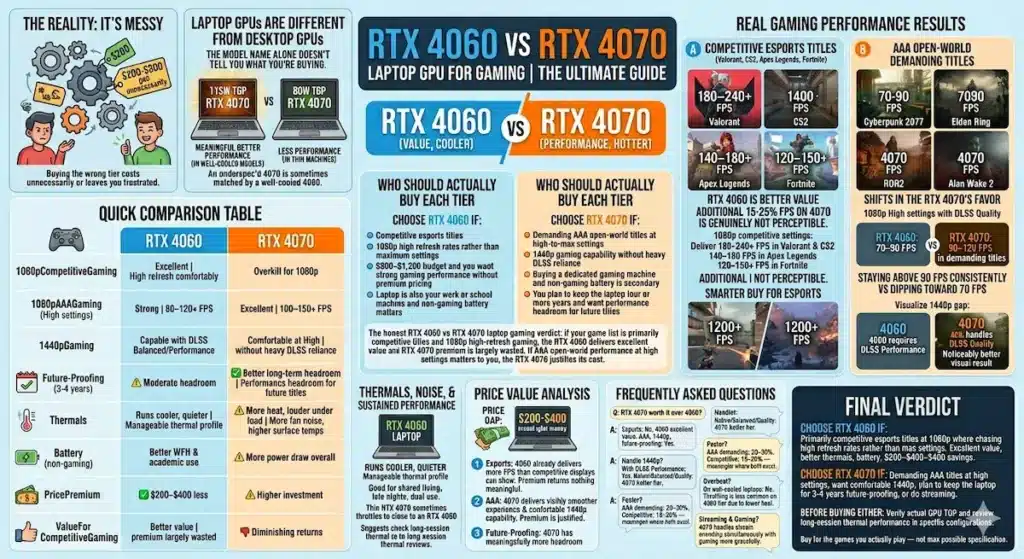
RTX 4060 vs RTX 4070 Laptop for Gaming in 2026 (Real Gaming Sessions, Honest Verdict)

Last Updated: May 2026 | Author: Marcus Hale | Reading Time: 10 min The RTX 4060 vs RTX 4070 laptop for gaming decision sounds straightforward — pay more, get more performance. But the reality of laptop GPU comparisons is messier than that, and buying the wrong tier costs either $200–$300 unnecessarily or leaves you frustrated with a machine that doesn’t handle the games you actually want to play. Here’s the part most GPU comparison articles skip: laptop GPUs are not desktop GPUs wearing the same name. An RTX 4060 laptop GPU and an RTX 4070 laptop GPU both vary in

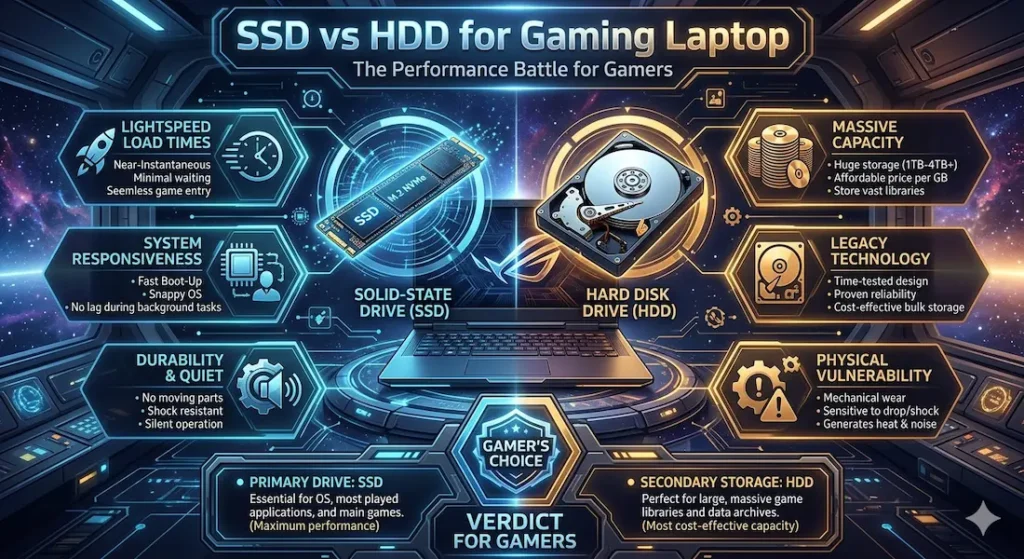
SSD vs HDD for Gaming Laptop

SSD vs HDD for Gaming Laptop (2026): The Ultimate Storage Choice for Faster Gaming

SSD vs HDD for Gaming Laptop: The Real Difference (From Someone Who’s Used Both) Author: Marcus Hale | Reading Time: 11 min There’s a specific kind of frustration every gamer has felt at least once. You boot up your laptop, load your favourite game, hit Play — and then you’re just sitting there. Staring. Counting ceiling tiles. The loading bar crawls. You wonder if something’s wrong. Nothing’s wrong. You just have the wrong storage. I’ve tested two near-identical gaming laptops side by side — same processor, same GPU, same RAM — where the only real difference was one had an

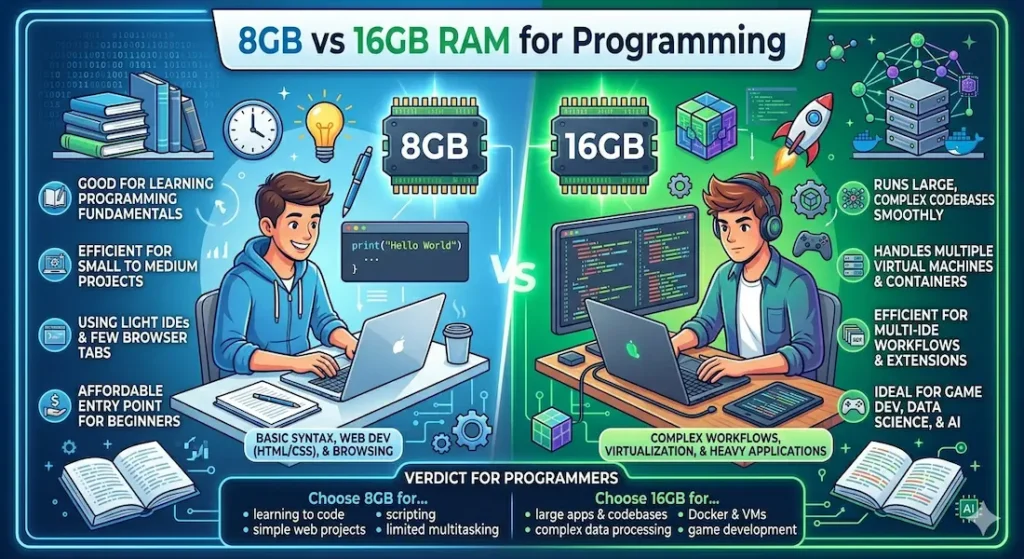
8GB vs 16GB RAM for Programming

8GB vs 16GB RAM for Programming (2026): What You’ll Regret After Buying

8GB vs 16GB RAM for Programming: What No One Tells You Until It’s Too Late A few months ago, a CS student reached out asking why his laptop felt sluggish. He’d bought it six months earlier and it was perfectly fine at first — responsive, quick to boot, no complaints. We looked at what he had open: VS Code with a handful of extensions, Chrome with around 12 tabs (Stack Overflow, documentation, a YouTube tutorial), a local development server, and Spotify running in the background. Nothing out of the ordinary for a programming student. That’s a Tuesday. But his system

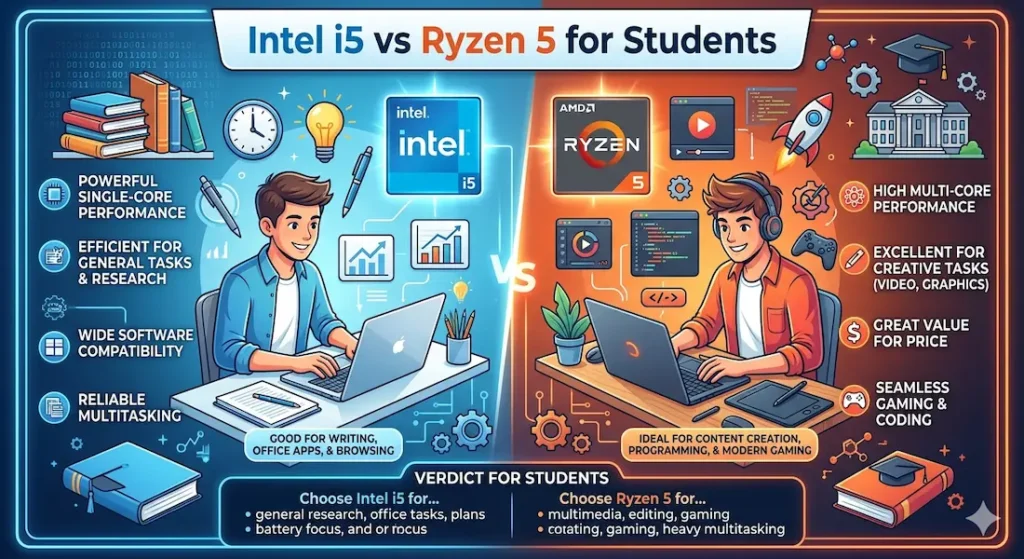
Intel i5 vs Ryzen 5 for Students

Intel i5 vs Ryzen 5 for Students (2026): Which Actually Performs Better in Real Use?

Intel i5 vs Ryzen 5 for Students in 2026: What Daily Use Actually Reveals A few weeks into the semester, I was sitting in the college library when the student next to me suddenly shifted in his seat. His laptop fan had kicked in — loud enough to turn a few heads in the quiet room. He glanced around, slightly embarrassed, closed a few Chrome tabs, and quietly moved his bag to reach the charging cable he hadn’t planned on needing yet. He was running Chrome with around twenty tabs open, a PDF textbook, a YouTube lecture on low volume,